Friday, July 24, 2009

Contest on Hannah's Blog


Hannah Moskowitz, YAYA contributor and author extraordinaire, is holding a contest on her blog.

In a few hours, it will officially be 1 month until BREAK.

I can't believe this is happening.

In honor of this momentous occasion, I want to hear any funny injury stories you have. Bonus if it involves a broken bone, but it's fine if not--I've never broken any bones myself, so I'm sympathetic if you don't have a story to share...

Give me your stories, I'll choose my favorite and the winner gets to name a character in the next chapter of ATWF. Male or female, doesn't matter. I need some names!


Click here to enter! And don't forget to look for Break, from Simon Pulse, available on August 25th.

Thursday, July 23, 2009

Do the Genre Hop! (Hop Hop Hop!)

Or, you know, don’t.

Fans of authors expect a certain voice or genre from an author after buying their first book. After all, say Meg Cabot (wonderful lady and author that she is) wrote a horror-erotica, violent Victorian-era YA novel. Her fans would be shocked, because that’s not something they expect from the author.

So it comes down to this: How much does the author owe the reader, and the market? If a voice is chatty and cutesy in the first novel, set in a high school, can the author “genre-hop” with their second novel (say a murder mystery set in medieval times?) Well, no. Not quite.

Often publishing contracts will include a clause stating that the publisher has the first look at the author’s next work. Maybe it’s only the author’s next work in said genre. There are even situations where, unfortunately, the author must have their next work be in the same genre regardless of their future plans for writing.

I’m going to make up a pseudonym here. Say Wright Author only planned on writing one young adult fantasy book their whole lives, and the manuscript got them a literary agent. Awesome, right? However, if their voice and genre aren’t consistent, their marketability down the road plummets. Authors are creating a name or “brand,” and readers expect something from that brand. Authors may well be forced to churn out another young adult fantasy book to fulfill the clause. Wright Author is stuck without a home for their loveably witty adult mystery.

I’m not saying this is how the world works—no, of course not, there are always exceptions and there are always restrictions. However, as a reader, would it bug you if your favorite author wrote something in a genre you don’t normally read? Would you “follow” the author over into another genre, or would you pass in favor of a new favorite author in the same genre you love?

Saturday, July 18, 2009

First Sentences Revealed

It's been a bit more than a week, but here's the list of books to match the first sentences I posted!

1. The day begins in the middle of the night.
Nick & Norah's Infinite Playlist by Rachel Cohn and David Levithan

2. Marly was dead, to begin with.
Marly's Ghost by David Levithan

3. It wasn't supposed to be this hot and humid on Cape Cod.
The Secret Circle: The Initiation by L.J. Smith

4. "Sex and religion don't mix," my grandma once told me.
The God Box by Alex Sanchez

5. Even the woods are burning.
Here Lies Arthur by Philip Reeve

6. After midnight, the apartment waited, still in the moonlight and the heat.
The Spellbook of Listen Taylor by Jaclyn Moriarty

If you liked any of these first sentences, maybe you should go and check out the book, too!

Friday, July 10, 2009

Interview: Eileen Cook

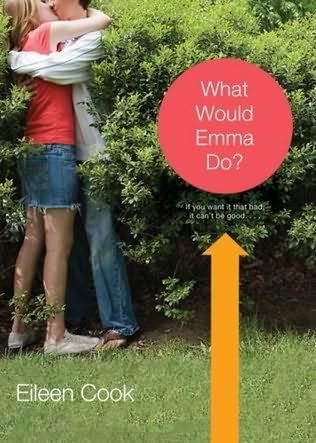
Eileen Cook's WHAT WOULD EMMA DO? is her first YA novel, but we hope to see more of her writing in this genre. WHAT WOULD EMMA DO? chronicles (isn't that a fun verb?) the coming of age of the titular Emma as she grows up in her small, religious town. Eileen was willing to do an interview with YAYA and, as you can see, she had a lot of fun answering our questions.


YAYA: How did you start writing?
Eileen Cook: Both of my parents are big readers. Weekly trips to the library were a part of our family routine and we’d come home with stacks of books. I’ve loved books and reading as long as I can remember. As soon as I understood that there people who got to make those stories up I knew that I wanted to do that. My parents saved an English homework assignment I did in second grade where the teacher wrote at the bottom “Someday I’m sure you will be an author!” When my first book came out my dad hunted down this teacher. She was over 90 years old and lived in a nursing home. We went out to visit her and my parents were hoping for a big meaningful moment- but she spent the whole time talking about her bunions.

Do you have any advice for aspiring authors?
1) Read- read a lot. You can learn so much about writing this way. Read books you like and books you hate. Break them down to see what works and what doesn’t. Underline or highlight passages/dialog you really like (assuming that this isn’t a library book). It isn’t about trying to write like someone else, it is about discovering the process of what makes a story work.

2) Keep Writing: A lot of people talk about writing, but don’t do it. With every thing you write you get a bit better, you learn a bit more. If you give up then you won’t be published. If you keep trying- then who knows?

3) Seize the day: You won’t have anything to write about if you never leave the house. Try new things, meet new people, travel, you never know what will lead you to the next story.


What’s your writing schedule like?
People have a schedule? I really should get one of those.
I love the idea of having a set routine or process, but I find my life keeps getting in the way. Sometimes I write at home and other times I like to be in a coffee shop or at the library. I write in the morning, afternoon, or evening- depending on when I have the time. I still work another job part time so writing has to fit in with everything else. The only consistent would be that when I am in the middle of the story I find I need to write at least a small bit every day or I lose track of the story.

You tackle some pretty big issues in your novel -- especially religion. Did you experience any feelings of trepidation?
Here is a wishy washy answer for you, yes and no. I know that some of the topics I covered are very important to people and I didn't want to offend anyone. However, when I'm reading the books I like are those that have something to say on big issues. I don't mind if people disagree with me, but I think it is important that we have the discussion. If we don't how will we ever see different points of view?
Some of my favorite books are banned so if WWED is ever on the list at least I'll be in great company!

Have you spent a lot of time in a small town?
I grew up in a small town in Michigan called Traverse City. It isn't that small anymore! It's grown a lot.

Do you have thoughts on the growth and evolution of YA as a genre?
I am HUGELY impressed at what is now available in YA. While there were some great books when I was a teen, there were also a lot of books that clearly had "a lesson." You would be reading along and suddenly it would be all "...and that is why young reader it is important to always think of the golden rule." It used to drive me nuts. I started reading more adult fiction because I wanted books that didn't always have a nice tidy outcome. YA books now reflect that teens are aware and facing a range of situations. There don't appear to be any topics that are taboo. It lets the reader decide what they want to pick up.

I want to ask our readers: What questions do you have for future interviews? Any authors you'd like to see? Email us! Our address is on the right-hand side of the page.

Monday, July 6, 2009

Firsts

Agents, editors, and the like frequently write/speak/blog about the importance of 'firsts' in novels: the first chapter, the first five pages, the first page, the first paragraph, the first sentence.

But how important are these things to actual readers?

Of course the first chapter would be important, since a boring first chapter would get you nowhere. And the first five pages should probably include something more than aimless dialogue or incessant exposition and back-story. But what about the first page? Or the first paragraph? Or, especially, the first sentence?

Usually, in my experience, by the time a reader opens a book to read the first page or two, they know at least a bit about the novel either from a friend, a magazine/newspaper article, a poster, the back of the book, or whatever. While the reader might put the book down if it just isn't for them, I question whether a first sentence, paragraph, or page will sway someone one way or another given what they already know about the book.

So I wanted to ask YAYA readers and contributors: Do you ever put a book down after reading the first sentence? The first paragraph? The first page?

I definitely understand putting a book down when the actual writing style doesn't mesh with your personal likes, but that would be true regardless of what the author put in that first page. Does the actual content ever sway your decision?

I took a look at the limited number of young adult books I have on my desk next to me and decided to write down some first sentences. Would you keep reading?

1. The day begins in the middle of the night.

2. Marly was dead, to begin with.

3. It wasn't supposed to be this hot and humid on Cape Cod.

4. "Sex and religion don't mix," my grandma once told me.

5. Even the woods are burning.

6. After midnight, the apartment waited, still in the moonlight and the heat.

Which of these sentences make you want to keep reading? Any of them? All of them? None of them?

Can you identify any of the books these came from? (Answers will come next week. I'll be surprised if anyone gets these(without using Google!), as the books are an eclectic mix spanning the last several years.)

One last question: Do you have any favorite first lines?

Sunday, June 28, 2009

Young Adult Genre Revival

This will be a relatively short YAYA posting, but I wanted to get everyone, readers and bloggers alike, involved, so make sure to offer your opinions!

Lately, literary agents have been looking for steampunk and dystopian novels, implying that these may become 'the next big thing' so to speak (no guarantees!).

So here's the question: Is there something you'd like to see in young adult novels, something that was prominent in the lengthy history of world literature, that isn't there now? Some genre, or topic, that you just love, but isn't present in today's young adult lit just yet?

For example, maybe you have a secret love of biji (
筆記), a genre from Classical Chinese literature that was like a notebook, with short stories, anecdotes, quotations, etc. from the author (Biji). There are a few books like this in young adult right now, like CATHY'S BOOK by Sean Stewart and Jordan Weisman (Amazon), but maybe you'd like to see more. (Note: Cathy's Book is also an interactive mystery, so slightly different, but very similar in principal.)

Or maybe you reread Homer's THE ODYSSEY (
Amazon) every single year and would like to see more young adult that has a large body of water as its main setting. I'm not sure of any current young adult like this, so leave a comment with an example if you know one.

Perhaps you're just looking for a new type of fiction all together such as the slice of life, or
tranche de vie, where there is minimal plot, little character development, and an open ending. Something more true to life than any other kind of fiction. The YAYA bloggers discussed a desire to see more of this just the other day. This, of course, would be a more difficult endeavor because keeping someone interested with the daily happenings of life is difficult, but it has been done. Non-YA examples include James Joyce's DUBLINERS (Amazon) and John Steinbeck's OF MICE AND MEN (Amazon).

So let me ask again, in case you become distracted with filling your Amazon shopping cart...

What genre, topic, or literature form would you like to see more of in modern young adult literature?

Sunday, June 21, 2009

Interview: Laurie Halse Anderson

Summer reading means a lot of things to us at YAYA, mostly because it's one of the few seasons when we can read for extended periods of time. One book we always, always recommend to aspiring YA writers is Laurie Halse Anderson's Speak. Laurie graciously agreed to do an interview as part of our Summer Author Spotlight.

In addition to Speak, Laurie has written five other YA novels: Twisted, Prom, Chains, Catalyst, and her newest novel, Wintergirls. She's won more awards than I care to count (mostly because it'll make me feel inferior - I'm fragile like that) and is an all-around very cool lady.


YAYA: How did you start writing?
Laurie Halse Anderson: I started writing for fun in second grade. I was a journalist in my twenties. I didn't try to be a published author until my early thirties.

From where have you drawn inspiration?
My Readers.

Speak seems to be a novel that we're always recommending to aspiring YA authors. Can you talk about the difference between writing a first book and a second, in terms of the expectations of a growing audience?
I found the expectations daunting. It took me awhile to figure out how to write without worrying about what other people would think.

Do you have any favorite scenes in your novels?
No

What was your day job before becoming a literary rockstar?
I don't know, I'm not there yet. (Modesty!) Before SPEAK was published, I was a mom and freelance journalist. (I'm still a mom!)

Have you written novels for other age groups?
Yes, historical novels aimed at middle grades; a series of animal adventure books for older elementary kids and picture books for little kids.

If so, what makes YA different?
Level of emotional intensity and more mature themes.

Do you have thoughts on the growth and evolution of YA as a genre?
I think it is wonderful because teenagers need good books to read. (Yes!!)

Do you believe that Speak and Wintergirls have the potential to become "crossover" novels?
Based on my mail, they already are. I am honored by that fact.

Do you have a favorite author?
Neil Gaiman

Do you have a favorite cliché?
I avoid cliches like the plague!

What's your writing schedule like?
Write from 7AM-3PM, go for a run, do writing business the rest of day. On a deadline, write for 18 hours a day.

Tuesday, June 16, 2009

Why YA? Revisited

So recently on a writing board I frequent, a writer was expressing his confusion over why an adult would want to write YA. He had only recently heard of the genre (not the first writer I've heard say that lately). He mentioned that he had heard the YA market was hot (it is) and wondered if writers were choosing to "limit" themselves by writing in the genre simply because of the market.

Now, of course, those of us on this blog enjoy writing YA (and sometimes other genres). So while we can't understand why someone wouldn't want to ;) if it doesn't appeal to them, we're not going to tell them they have to read or write it. Historical fiction and erotica don't appeal to me, so I don't read or write them either.

Yes, the YA market is hot. This does not mean that writers who would rather not write YA should suddenly focus on YA. First of all, if one hasn't read the genre (as with any genre), that writer won't know what's been done, what hasn't, or what YA readers want. Second of all, writing solely for the market suggests that that writer has no passion for the genre, and will get left behind by the passionate YA writers. Third of all, there are many more YA writers now than there used to be--somewhat cause and effect of the whole genre getting hot--so even though they may be publishing more books, there's a lot of competition. Finally, and maybe most importantly, by the time a writer entering the genre writes a novel, edits, gets it beta'd, gets an agent, and edits it again, who knows what the status of the market will be? There are plenty of excellent agents who take non-YA, and plenty of publishers who are still publishing non-YA, it's just not as hot right now, and both are looking for "sure things" at this time. (As agent Nathan Bransford said a week or two ago: "Publishers right now want the surest of sure things that are so sure it beats surety over its sure head. And agents have to adjust what they take on accordingly." http://nathanbransford.blogspot.com/2009/06/stepping-up-your-game.html)

What that means for tomorrow's market? Who knows? The recession might be over. A new Harry Potter-type success might drive buyers towards a different genre. People might suddenly realize that it's a lot cheaper to buy a book and read it over the course of [insert reading speed here] rather than go see several movies in the same span of time, which would increase book sales, and hopefully make publishers less stingy about what they consider a sure thing.

So for the lucky people who love the genre, YA is the place to be right now. Why are we lucky? Because we already have novels. We're already in the process of writing/editing/betaing/submitting the novels we wrote because we love the genre. For various reasons.

Recently I answered a thread in a writing forum that asked what drew us to the genre. I went on a long rambling post there about how as my tastes changed over the years (from childhood to my late twenties (now)), I was still interested in the stories about teens and how it led directly into my writing about that age group. It's easier for me to point to tv shows for this because during college, I didn't read for fun as much. When I was a kid, I know I watched shows like the kid sitcom Saved By the Bell and was fascinated by the high school life I thought I was going to be entering. By high school, I was watching dramas instead, Buffy the Vampire Slayer comes instantly to mind (Buffy was just a year younger than me). I followed Buffy (and pretty much only Buffy) into college, where I was introduced to anime and roleplaying games. Many many anime focus on teenage protagonists, so I was still focusing my entertainment on teens. I played an anime-based RPG my last two years of college, playing a sixteen-year-old. This led me to writing fanfic for that particular game, and when I moved out of it, it was perfectly natural to continue writing about teens.

Other reasons "why YA" include things like the magic of first love, the appeal of coming of age, appreciation of tighter pacing, love of stronger voices, etc. These are things that I've heard other people mention as well.

Now, do you have to "limit" yourself to enter this exciting (well, to me) world? Not any more than any other genre. As you probably picked up on in the early days of this blog, the YAYAs fully support edgy YA (even though some of us don't read much of it ourselves). But can you get away with anything in a YA novel? Yes. And no. Remember publishers want the surest sure surety for their books. This means that they want things that are just different enough from what's selling that it's new and exciting without being so different that it's too much of a risk. Yes, you can have a different voice from the average YA novel. But you have to be willing to take on a few rejections from publishers who don't want to risk that it's not going to appeal to a teen. Yes, you can have rape, incest, more explicit sex, drugs, smoking, drinking, self-injury, etc. Those things are also very hot right now in the edgier YA market. But when the audience/agent/publisher feels they might be gratuitous, it's going to be asked to be taken out. And when you start piling them on one another, you're leaving "sure thing" territory and becoming risky. There is also a market for less edgy YA, which is what I would have been reading as a teen, so I'm glad for that. (And let's be honest, even now some of the edgy things that come out are not things I really want to read.)

The nice thing about YA is that there are so many different things to do within it. You have the same genres as adult fiction, just set with teen protagonists and themes. You can go edgy, you can go tame, you can go fantasy, you can go literary, you can go deep (Yeah, teens have already been taught metaphors and symbolism, you know), you can go fluffy, you can go dark. You can do a lot of stuff in YA.

If you want to :)

But anyway, why do you write or read YA? What is it that draws you to that section of the book store?

Saturday, June 13, 2009

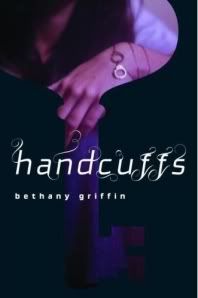
Book Review: Handcuffs by Bethany Griffin

Summer's here! That means YAYA is kicking off a summertime book club and study. We're starting with a little plug for our own Bethany Griffin, whose novel, Handcuffs recently came out with Delacorte. This review was originally featured at Gracetopia. Grace is, as well as my Facebook wife, a good friend and fellow writer.

----

She runs out of the room crying.
Let me start over.
My mom runs out of the room crying.
Um, let me start over.


Bethany Griffin’s debut novel, Handcuffs, follows the story of Parker Prescott, an “ice princess” with problems. Her parents are unemployed and about to lose their house, the local high school blogger is spreading rumors that she’s a whore, her sister’s marriage is falling apart right on top of her, and–oh yeah–her ex-boyfriend came over and there was that incident with the handcuffs.

This ain’t Sweet Valley High, folks.

Griffin’s writing is taut and quick, moving through this high-school hell at breakneck speed as Parker tries to fix her life. I could not put the book down–it totally stole an entire Saturday from me.

While the plot is a good one—fast-paced, twisty—it was really the characters that grabbed hold and wouldn’t let me leave. They are exquisitely drawn, fresh and real. I loved Parker, and I was definitely rooting for her very early on. And I may have occasionally said “no! no! Parker don’t!” aloud to the book. Yes, that may have happened. Parker and her problems are easy to relate to–her everyday problems as well as her extraordinary ones. And the ex, ohhhh the ex. He’s mysterious and dangerous… and nameless. Throughout the book he is referred to only as “him” or “my ex-boyfriend” and so on. A cute gimmick? I don’t think so. It focuses the story on Parker. It’s Parker’s feelings for the boy that are important, not necessarily the boy himself. An interesting literary choice on Griffin’s part, and I think a good one.

So overall, I enjoyed this book immensely and I highly recommend it for the YA reader in your life.

Disclaimer: I do happen to know Bethany, she is awesomesauce, but I didn’t let that influence the writing of the review; please don’t let it influence your reading of it.