Showing posts with label mainstream. Show all posts

Friday, July 24, 2009

Contest on Hannah's Blog


Hannah Moskowitz, YAYA contributor and author extraordinaire, is holding a contest on her blog.

In a few hours, it will officially be 1 month until BREAK.

I can't believe this is happening.

In honor of this momentous occasion, I want to hear any funny injury stories you have. Bonus if it involves a broken bone, but it's fine if not--I've never broken any bones myself, so I'm sympathetic if you don't have a story to share...

Give me your stories, I'll choose my favorite and the winner gets to name a character in the next chapter of ATWF. Male or female, doesn't matter. I need some names!


Click here to enter! And don't forget to look for Break, from Simon Pulse, available on August 25th.

Friday, July 10, 2009

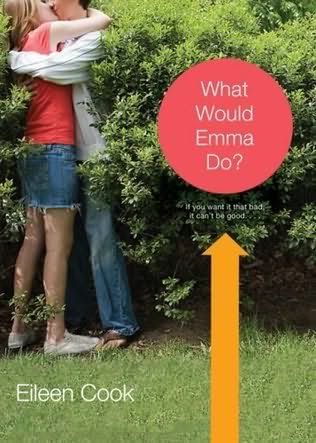
Interview: Eileen Cook

Eileen Cook's WHAT WOULD EMMA DO? is her first YA novel, but we hope to see more of her writing in this genre. WHAT WOULD EMMA DO? chronicles (isn't that a fun verb?) the coming of age of the titular Emma as she grows up in her small, religious town. Eileen was willing to do an interview with YAYA and, as you can see, she had a lot of fun answering our questions.


YAYA: How did you start writing?
Eileen Cook: Both of my parents are big readers. Weekly trips to the library were a part of our family routine and we’d come home with stacks of books. I’ve loved books and reading as long as I can remember. As soon as I understood that there people who got to make those stories up I knew that I wanted to do that. My parents saved an English homework assignment I did in second grade where the teacher wrote at the bottom “Someday I’m sure you will be an author!” When my first book came out my dad hunted down this teacher. She was over 90 years old and lived in a nursing home. We went out to visit her and my parents were hoping for a big meaningful moment- but she spent the whole time talking about her bunions.

Do you have any advice for aspiring authors?
1) Read- read a lot. You can learn so much about writing this way. Read books you like and books you hate. Break them down to see what works and what doesn’t. Underline or highlight passages/dialog you really like (assuming that this isn’t a library book). It isn’t about trying to write like someone else, it is about discovering the process of what makes a story work.

2) Keep Writing: A lot of people talk about writing, but don’t do it. With every thing you write you get a bit better, you learn a bit more. If you give up then you won’t be published. If you keep trying- then who knows?

3) Seize the day: You won’t have anything to write about if you never leave the house. Try new things, meet new people, travel, you never know what will lead you to the next story.


What’s your writing schedule like?
People have a schedule? I really should get one of those.
I love the idea of having a set routine or process, but I find my life keeps getting in the way. Sometimes I write at home and other times I like to be in a coffee shop or at the library. I write in the morning, afternoon, or evening- depending on when I have the time. I still work another job part time so writing has to fit in with everything else. The only consistent would be that when I am in the middle of the story I find I need to write at least a small bit every day or I lose track of the story.

You tackle some pretty big issues in your novel -- especially religion. Did you experience any feelings of trepidation?
Here is a wishy washy answer for you, yes and no. I know that some of the topics I covered are very important to people and I didn't want to offend anyone. However, when I'm reading the books I like are those that have something to say on big issues. I don't mind if people disagree with me, but I think it is important that we have the discussion. If we don't how will we ever see different points of view?
Some of my favorite books are banned so if WWED is ever on the list at least I'll be in great company!

Have you spent a lot of time in a small town?
I grew up in a small town in Michigan called Traverse City. It isn't that small anymore! It's grown a lot.

Do you have thoughts on the growth and evolution of YA as a genre?
I am HUGELY impressed at what is now available in YA. While there were some great books when I was a teen, there were also a lot of books that clearly had "a lesson." You would be reading along and suddenly it would be all "...and that is why young reader it is important to always think of the golden rule." It used to drive me nuts. I started reading more adult fiction because I wanted books that didn't always have a nice tidy outcome. YA books now reflect that teens are aware and facing a range of situations. There don't appear to be any topics that are taboo. It lets the reader decide what they want to pick up.

I want to ask our readers: What questions do you have for future interviews? Any authors you'd like to see? Email us! Our address is on the right-hand side of the page.

Saturday, June 13, 2009

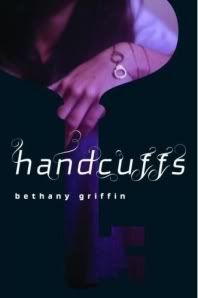
Book Review: Handcuffs by Bethany Griffin

Summer's here! That means YAYA is kicking off a summertime book club and study. We're starting with a little plug for our own Bethany Griffin, whose novel, Handcuffs recently came out with Delacorte. This review was originally featured at Gracetopia. Grace is, as well as my Facebook wife, a good friend and fellow writer.

----

She runs out of the room crying.
Let me start over.
My mom runs out of the room crying.
Um, let me start over.


Bethany Griffin’s debut novel, Handcuffs, follows the story of Parker Prescott, an “ice princess” with problems. Her parents are unemployed and about to lose their house, the local high school blogger is spreading rumors that she’s a whore, her sister’s marriage is falling apart right on top of her, and–oh yeah–her ex-boyfriend came over and there was that incident with the handcuffs.

This ain’t Sweet Valley High, folks.

Griffin’s writing is taut and quick, moving through this high-school hell at breakneck speed as Parker tries to fix her life. I could not put the book down–it totally stole an entire Saturday from me.

While the plot is a good one—fast-paced, twisty—it was really the characters that grabbed hold and wouldn’t let me leave. They are exquisitely drawn, fresh and real. I loved Parker, and I was definitely rooting for her very early on. And I may have occasionally said “no! no! Parker don’t!” aloud to the book. Yes, that may have happened. Parker and her problems are easy to relate to–her everyday problems as well as her extraordinary ones. And the ex, ohhhh the ex. He’s mysterious and dangerous… and nameless. Throughout the book he is referred to only as “him” or “my ex-boyfriend” and so on. A cute gimmick? I don’t think so. It focuses the story on Parker. It’s Parker’s feelings for the boy that are important, not necessarily the boy himself. An interesting literary choice on Griffin’s part, and I think a good one.

So overall, I enjoyed this book immensely and I highly recommend it for the YA reader in your life.

Disclaimer: I do happen to know Bethany, she is awesomesauce, but I didn’t let that influence the writing of the review; please don’t let it influence your reading of it.

Sunday, April 12, 2009

Yes, I'm Blue: Amazon Discriminates Against YA Queer Literature

Something fishy is going on at Amazon.com. Search for "homosexuality," for instance, and here are some of the first books that pop up:

A Parent's Guide to Preventing Homosexuality
Can Homosexuality Be Healed?
You Don't Have to Be Gay: Hope and Freedom for Males Struggling With Homosexuality or for Those Who Know of Someone Who Is


Specify that you're looking for the most popular books featuring homosexuality, and you still won't find literary classics such as Brokeback Mountain, or even non-fiction books like the biography of Harvey Milk.

Amazon recently released the following statement:


In consideration of our entire customer base, we exclude "adult" material from appearing in some searches and best seller lists. Since these lists are generated using sales ranks, adult materials must also be excluded from that feature.


Since their "entire customer base" is apparently offended by homosexual content (it's not as if any of these excluded books could be made into, say, Oscar-nominated movies or something), it's necessary to disable the sales rank functions for these books. The ability for a customer to determine their popularity disappears.

Never fear--you can still find Playboy on their sales rankings, along with all the other straight erotica you could ever want.

You can still search for vibrators, though I'm surprised they don't require a contract that you'll only use them for heterosexual fantasizing.

Lest you think this only affects erotica, meta_writer on livejournal is compiling a list of all the books affected. A few of the YAs include the Rainbow Boys trilogy by Alex Sanchez and the Am I Blue? book of essays and short stories by Marion Dane Bauer.

Just after my older sister came out of the closet, she used Am I Blue? as the subject of her ninth grade book report.

The teen years are a confusing time for sexuality. Books like Alex Sanchez's and anthologies like Am I Blue? help show teens questioning their place in a heteronormative society that it's okay to be different, that they're fine how they are, that they don't have to change.

Now they'll find books asking if they can be cured and telling them how their parents could have prevented them.


EDIT: Here is a petition against Amazon's new policy.
http://www.thepetitionsite.com/1/in-protest-at-amazons-new-adult-policy

Sunday, January 6, 2008

St. Francis Receiving the Stigma

If I had a motto, it would be, "Okay, but, seriously."

So. Okay. But. Seriously.

Sophie and I are the same age, live in the same county, and are both halfies of some kind. And we're both basically beasts. But that's mostly where the similarities end.

While Sophie's writing about faeries, I'm writing about eating disorders. While she's writing about fairy-dust-drugs, I'm writing about actual drugs. When she's writing about explosions, I'm writing about the families of the people who are killed in those explosions, trying to put their lives back together.

I'm not trying to qualify myself over Soph's. Just the freakin opposite. But that's the stigma.

There's this stigma that it's easier to write fantasy, sci fi, chick lit, than it is to write anything edgy. As someone who's always fallen more to the realistic-edgy side, I've definitely seen my literary brethren sticking up their noses at any manuscripts that don't include mental trauma, car crashes, and child abuse.

I'm exaggerating, obviously, but bear with me for a second.


Okay. But. Seriously.


I've had agents tell me my prose is too dark. I've had beta readers tell me my prose is too dark. Hell, I'm surprised my cats aren't telling me my prose is too dark. It's not a problem with every manuscript, and it's not a problem with every agent, but it's a problem that's there.

And the truth is, being dark is easy.

I'm a teenager. Let's be honest, here. Life isn't a bowl of cherries.

Sometimes the hardest thing to do is lighten up.

And there's a stigma. There's the idea that people like Sophie, who write fantasy, and people like Madeleine and Megan, who write chick-lit YA (is that offensive? Hope not) aren't real writers. That they don't work as hard, or appreciate the craft as much, as someone who writes straight-up literary. Straight-up real life.

And I sort of have to question when real life became better than fantasy. When real life became better than anything.

I'm not immune to it, though. I've got one manuscript I couldn't finish because it was science fiction, and I couldn't reconcile my literary side with the part of me that wanted to write this manuscript. I couldn't bring myself to write science fiction. And I've got one manuscript that has a maybe-angel in it, and even querying it as Suburban Fantasy (made that up...cute, eh?) was difficult for me. I'll admit to magical realism every once in a while, but I practically got hives when I wrote my introductory post and admitted my stuff has fantasy elements.

But it does. And if I didn't feel that pressure...the pressure that if it's light, it's not important, and if it's fantasy, it's not real, keeps me from writing certain things, and keeps me from querying manuscripts in a way that would be most productive for them. Because even though I know it's real writing...I don't feel it.

So I guess Sophie and I have more in common than I thought. We both live in the same town. We're both sixteen. We're both halfies. And we both write fan...

Nope. Can't say it.


<3 hannah

Friday, January 4, 2008

An Introduction and Devices


Before I get to the topic of my post—devices—, I’m figuring I should introduce myself. My name is Megan, or shall I say my blog name, Meggy. I’m fifteen, write young adult novels, and recently snagged an awesome agent. My taste in books, as well as my writing style, lean toward lighthearted and humorous YA romances.

Now that I’ve finished talking about me and you all know that I’m not some random person spewing out opinions on things she knows nothing about (sheesh, I am a random person spewing out opinions on things she knows a little bit about), I guess I can continue.

Yesterday I finished reading The Boy Book by E. Lockhart, the sequel to The Boyfriend List. I highly recommend both, by the way. Each of them uses, what for the purpose of this blog, I’m labeling as devices. The two books use footnotes. The Boyfriend List uses, obviously, a list. It contains of all the guys the main character, Ruby, has been involved with, and the story unfolds coinciding with the list; each chapter has a different guy. The Boy Book uses excerpts of a book Ruby and her friends (well, some ex-friends, just read the book peoples!) wrote about the fascinating subject of boys to open up a chapter. In my humble opinion, these devices, on top of the main character’s hilarious voice, made the book unique.

Books with these type of devices have seem to become more and more common. E-mails, IMs, notes, blog entries, and lists are being incorporated into texts. Heck, some books are being entirely told through what would normally be devices strewn throughout a novel.

My work-in-progress is one such book. It’s told through not only email exchanges between a boy and a girl (who may or may not be a romantic item), but by a book the main male character writes about his real life romantic experience and sends to the girl. This device-filled glory is interrupted on occasion by a third person point of view from the girl as she remembers her own side of the story and bristles when the guy’s use of similes gets out of hand; he compares her butt to jello, for goodness sake!

This is a project that I’m rewriting. It was told before in first person from the girl’s point of view, no devices, no emails, just straightforward storytelling, but it lacked something. Then I came up with the idea above, and now I feel like the story—though there’s still that tremendous need for polishing still, oh, and finishing, oh, and adding the second point of view, you get the picture—actually has some spark.

So yay for devices! Yay for all the books that they give spark too!

Do you guys read any books that incorporate, or are told entirely in, such devices, and did you like the way they were used? Tell me in the comments section!